
How to Find High-Intent Keywords That Convert
Not all keywords are created equal. The ones that grow your business aren’t necessarily the ones with the most searches — they’re the ones with the right intent, where the searcher is close to needing what you offer. This guide explains how to find and prioritise high-intent keywords that drive conversions and revenue, rather than chasing high-volume vanity terms that bring traffic but few customers. It’s the keyword approach behind the results in our case studies.
- High-intent keywords (commercial and transactional) drive conversions; high-volume vanity terms often don’t.
- Prioritise intent over raw volume — especially for smaller sites where focus matters most.
- Check what currently ranks to judge a term’s intent and difficulty; match your content type to it.
- Target high-intent terms close to both converting and ranking for early wins.
- Measure against conversions and revenue, not just rankings, and double down on what works.
Why intent beats volume
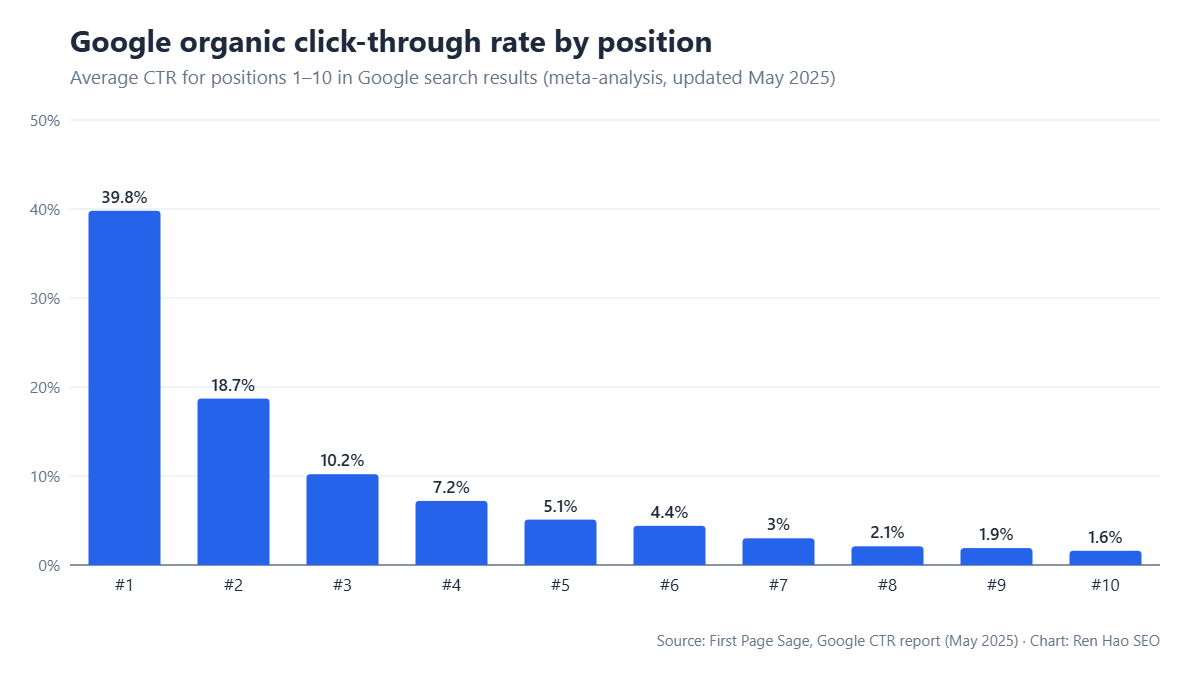
Search volume tells you how many people search a term; intent tells you what they want and how close they are to acting. A high-volume informational term might bring lots of traffic that never converts, while a lower-volume commercial term can bring fewer but far more valuable visitors who are ready to buy. For a business, the second is usually worth far more — which is why we always prioritise intent over raw volume.
This matters even more for smaller sites and newer businesses, where focus is everything. Chasing high-volume head terms you have little chance of ranking for wastes effort; targeting achievable, high-intent terms close to a purchase produces real customers and early wins. It’s a core part of the prioritisation discipline we cover in why most SEO fails.
The types of search intent
Search intent broadly falls into four types. Informational searches seek knowledge (‘how does SEO work’). Navigational searches look for a specific site or brand. Commercial searches research before a purchase (‘best SEO agency’, ‘X vs Y’). And transactional searches signal readiness to act (‘hire SEO agency’, ‘buy X’). The commercial and transactional terms are where buying intent is highest, and they’re usually the most valuable to target — though informational content has its place in building authority and capturing people earlier in their journey.
The same words can carry different intent, so always check what actually ranks for a term. If the top results are all product or service pages, Google has decided the intent is transactional, and a blog post won’t rank no matter how good it is. Match your content type to the intent Google already rewards.
How to find high-intent keywords
Start by listing the problems your business solves and the terms buyers use when they’re close to needing you — think ‘best [your service]’, ‘[service] near me’, ‘[your product] vs [competitor]’, ‘[service] pricing’, ‘hire [service]’. These commercial and transactional phrases signal buying intent. Expand them with keyword tools (Google Keyword Planner, Ahrefs, Semrush or free alternatives) to find related terms and rough volumes.
For each candidate, weigh intent (how close to a purchase), difficulty (can you realistically rank, given who’s there now), and volume (in that order of importance for most businesses). A lower-volume term with strong commercial intent and beatable difficulty is usually far more valuable to pursue than a high-volume term you can’t rank for. Look at the current top results to judge both intent and difficulty.
Prioritising and acting on them
- Once you have a list, prioritise ruthlessly: focus first on the high-intent terms closest to both converting and ranking, where concentrated effort will produce early wins. Build genuinely useful content that matches the intent and is better than what currently ranks, then earn the authority to lift it. Don’t scatter your effort across dozens of terms at once — depth and focus win, as we stress throughout our SEO guides.
- Measure against conversions and revenue, not just rankings, so you know which keywords are genuinely driving business and can double down. If you’d like help identifying the highest-intent, most achievable opportunities for your specific site, a free SEO audit includes exactly this kind of keyword and opportunity analysis.
A practical framework for scoring intent
Search volume tells you how many people type a phrase; it says nothing about whether they’ll ever buy. We score keywords on three axes instead. Specificity: ‘crm’ is unknowable, ‘crm for real estate teams pricing’ is a buyer. Modifiers: words like pricing, vs, alternative, near me, for [use case], best [category] for [audience] carry commercial weight. SERP evidence: if Google shows ads, shopping results and comparison pages, Google has already concluded the query is commercial — the SERP is your free intent oracle.
Then weigh intent against winnability. A high-intent term dominated by giants may still lose to a slightly-lower-intent term you can actually rank for this quarter. The portfolio that wins is a ladder: winnable high-intent terms now funding the authority you need for the harder terms later.
Where high-intent keywords hide
- 1Your own search-terms dataSearch Console queries with impressions but page-two rankings are pre-validated demand you’re already almost capturing. Optimising these is the cheapest traffic you’ll ever buy.
- 2Competitor comparison demandQueries naming competitors — ‘[rival] alternative’, ‘[rival] vs’ — are bottom-of-funnel buyers actively shopping. Honest comparison content converts them.
- 3Sales and support conversationsThe exact phrases prospects use on calls and in tickets are keywords no tool surfaces. Mine them monthly.
- 4Long-tail question clustersIndividually tiny, collectively large — and answer-engine friendly. A cluster of specific questions often out-earns one head term.
- 5Paid search dataIf a term converts in PPC, it will convert organically. Your ads account is an intent database most SEO teams never open.
Intent research when AI answers the easy questions
AI Overviews increasingly absorb informational queries — definitions, simple how-tos — which means traffic for those terms is shrinking even at stable rankings. The strategic response is to weight your keyword portfolio further down-funnel: comparisons, evaluations, pricing and use-case queries where the searcher needs more than a paragraph answer and where being the cited or clicked source still leads to revenue.
It also changes content design: the keywords still worth winning deserve pages that go beyond what an AI summary can deliver — first-hand data, genuine comparison, calculators, proof. Intent research and content depth are now the same discipline.
From keyword list to content plan
- 1Cluster by intent, not topicGroup terms by what the searcher needs — compare, price, implement, define. One page per intent-cluster, not per keyword.
- 2Score winnability honestlyFor each cluster, eyeball the current SERP: domains you can realistically out-author this quarter, or giants you can’t? Sequence accordingly.
- 3Map to page typesCommercial clusters → service/category pages; comparison clusters → vs/alternative pages; informational clusters → guides that route readers onward.
- 4Assign measurable jobsEvery page gets a target cluster and a conversion job. ‘Rank for X, produce Y enquiries’ is a plan; ‘publish content’ is not.
- 5Revisit quarterlyDemand shifts, SERPs reclassify, competitors move. A quarterly re-score keeps the portfolio honest.
Validating intent before you invest
Before committing a build-out to a keyword cluster, validate it cheaply. Check the SERP’s commercial signals (ads and product results = Google sees money). Check what already ranks — if every result is a different format than you planned, the plan is wrong. If you run paid search, test the term with a small spend: a keyword that converts in PPC will convert organically, and a keyword that bounces in paid will waste an organic investment too.
This pre-flight check costs an hour and routinely saves months. The most expensive keyword mistake isn’t targeting the wrong term — it’s discovering it six months after the content shipped.
For the primary sources behind these recommendations, see Google’s SEO Starter Guide on how Google interprets queries and content, and Google’s guide to its ranking systems.
Written by the Ren Hao SEO team and reviewed by Ren Hao, founder and lead SEO strategist. Our guidance comes from real client work — over 100 SEO audits and $1,500,000+ in client sales value generated with white-hat, data-driven methods — not recycled theory.