
Tracking SEO Against Revenue, Not Vanity Metrics
Too much SEO is measured by vanity metrics — rankings and traffic for their own sake — when what actually matters to a business is leads, pipeline and revenue. This guide explains how to track SEO against genuine business outcomes, so you know what’s really working and can invest accordingly. It’s the revenue-first discipline behind every result in our case studies.
- Rankings and traffic are means, not ends — measure SEO by leads, pipeline and revenue.
- Traffic that doesn’t convert is cost; a modest high-intent ranking can beat a number-one vanity term.
- Track organic conversions, their value, attributable revenue, and the high-intent rankings that drive them.
- Set up conversion tracking (Analytics) and connect through to revenue (CRM or e-commerce data).
- Use the data as a feedback loop — double down on what drives revenue, refine the rest.
Why vanity metrics mislead
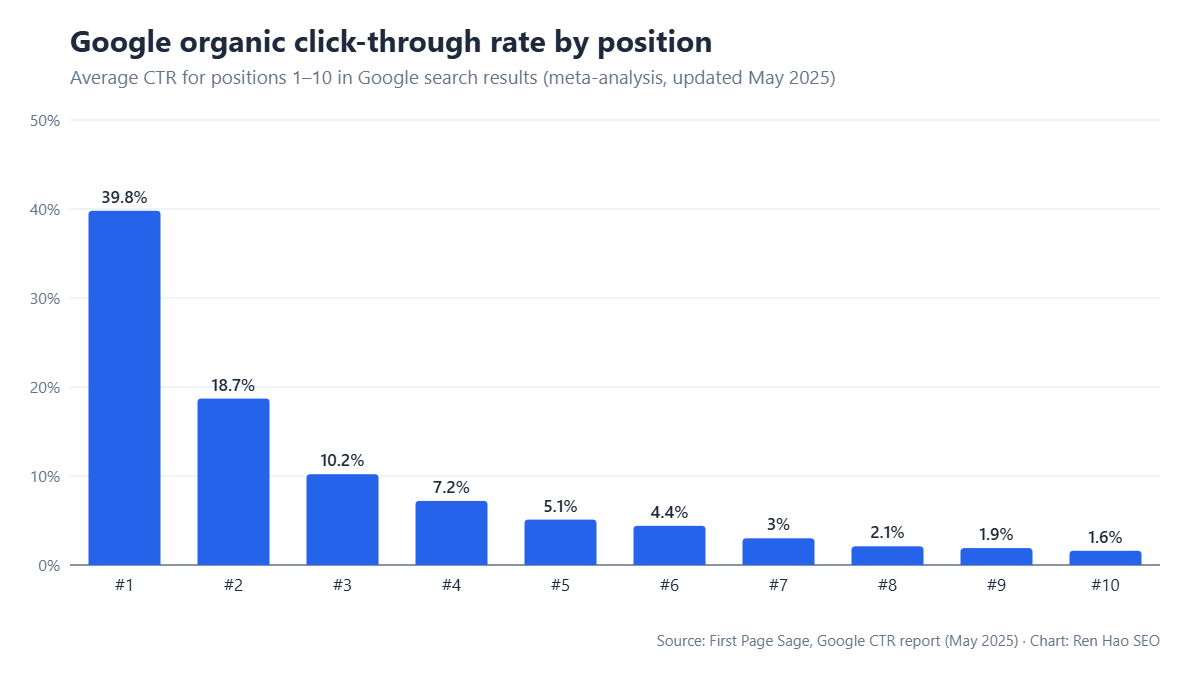
Rankings and traffic feel like progress, but they’re means, not ends. A keyword ranking number one is worthless if it brings no qualified visitors who convert, while a modest ranking on a high-intent commercial term can be transformative. Traffic that doesn’t convert is just cost. Measuring SEO by rankings and raw traffic alone can make a campaign look successful while the business sees no real return — a dangerous disconnect.
The newest column in that attribution stack is AI-referred traffic, which GA4 buries under generic referrals until you segment it: our step-by-step guide to measuring AI traffic in GA4 covers the channel group, referrer patterns and the honest limits.
This is why we always measure against business outcomes. The point of SEO isn’t rankings or visits; it’s qualified customers and revenue. Keep the vanity metrics as diagnostics, but judge success by what reaches the bottom line.
The metrics that actually matter
Track the metrics that connect SEO to your business: organic conversions (leads, sign-ups, sales), the quality and value of those conversions, revenue attributable to organic traffic, and the rankings of the specific high-intent terms that drive those outcomes. For lead-gen businesses, follow leads through to pipeline and closed revenue; for eCommerce, track organic revenue directly.
Rankings and traffic still have a place — as leading indicators and diagnostics — but they sit below the outcome metrics, not above them. The hierarchy is: revenue and leads first, then the conversions and high-intent rankings that produce them, then supporting traffic and ranking data.
How to set up revenue tracking
Set up Google Analytics with conversion tracking (and ideally e-commerce or lead tracking) so you can see what organic visitors actually do, and Google Search Console for the search side. Define your key conversions clearly, and where possible connect them through to revenue — via your CRM for lead-gen, or e-commerce data for online sales. This lets you attribute genuine business value to organic search.
The aim is a clear line from search to outcome: this content earned this traffic, which produced these conversions, worth this revenue. With that visibility, SEO stops being a leap of faith and becomes a measurable investment — which also makes it far easier to justify and prioritise, as we discuss in how to measure SEO ROI.
Using the data to improve
Measurement is a feedback loop, not a report card. Use it to learn what genuinely drives business: which content and keywords produce conversions and revenue, where visitors drop off, what’s worth doing more of. Double down on what works, fix or drop what doesn’t, and keep refining. The businesses that win at SEO measure honestly, learn fast, and continuously improve.
This revenue-first discipline also keeps your SEO focused on the right priorities — the high-intent terms and content closest to revenue — rather than chasing traffic for its own sake. If you’d like help connecting your SEO to genuine business outcomes, a free SEO audit and our ROI calculator are good starting points.
Building the ranking-to-revenue pipeline
Revenue attribution for SEO is a plumbing problem before it’s an analytics problem. The chain is: organic landing page → tracked conversion event (form, call, purchase) → CRM record carrying the source → closed revenue. Every break in that chain — untagged forms, calls that bypass tracking, CRM fields nobody fills — silently deletes SEO’s credit. We instrument the chain end-to-end first; only then do the dashboards mean anything.
For lead-gen businesses, the key join is passing landing page and source into the CRM at lead creation, so when a deal closes months later it still knows it began with an organic visit to a specific page. For eCommerce it’s cleaner: organic revenue by landing page is native in analytics — the work is segmenting brand vs non-brand so you measure growth you created, not demand you already had.
Metrics that mislead — and what to read instead
- 1Average positionAn average across hundreds of terms hides everything. Track positions on the specific money terms, individually.
- 2Raw trafficTraffic including brand and irrelevant queries flatters every report. Non-brand, commercial-page traffic is the honest line.
- 3Conversions without valueA thousand newsletter signups can hide zero pipeline. Weight conversions by downstream value.
- 4Last-click attribution aloneSEO often opens journeys paid closes. Check assisted conversions before concluding organic ‘doesn’t convert’.
- 5Month-over-month panicSeasonality and algorithm noise swamp single months. Judge trend lines year-over-year.
Reporting that survives the boardroom
Executives don’t fund rankings; they fund growth with evidence. The report that wins budget shows three lines: non-brand organic revenue (or pipeline) trending up, the cost of that revenue versus paid acquisition falling in relative terms, and the specific pages and terms responsible — so the next investment has an obvious target. Everything else is appendix.
This is also the honest defence of SEO in the AI era: clicks on informational terms may erode, but revenue from commercial organic visibility is measurable, durable and increasingly cheap relative to rising paid costs. Measured properly, the channel argues for itself.
Implementing attribution in one sprint
- 1Define the money eventsPurchases, qualified-lead forms, booked calls — the events that map to revenue. Everything else is diagnostics.
- 2Tag and test captureEnsure each event fires with landing page and source attached. Submit a test lead and follow it through; broken plumbing is the norm, not the exception.
- 3Pass source into the CRMHidden form fields carrying source/landing-page into the lead record connect closed revenue back to organic entry pages months later.
- 4Build the one dashboardNon-brand organic sessions → money events → pipeline/revenue, by landing page, trended. One screen, updated monthly, ends the ‘is SEO working’ debate.
Handling the messy attribution cases
Reality complicates clean models: phone-first businesses need call tracking with source capture or organic’s best leads vanish from the books; long B2B cycles mean today’s revenue reflects last year’s rankings — report cohorts by lead-creation date to keep cause and effect honest; multi-touch journeys (organic discovers, paid closes) deserve an assisted-conversions view before any channel gets axed.
Perfect attribution doesn’t exist; decision-grade attribution does. The standard is consistency — measure the same way every month, document the model’s known gaps, and trends become trustworthy even where absolutes stay fuzzy.
The primary sources behind this guidance: Google’s helpful content documentation on what it rewards, and Google’s ranking systems guide for how those rewards are applied.
Written by the Ren Hao SEO team and reviewed by Ren Hao, founder and lead SEO strategist. Our guidance comes from real client work — over 100 SEO audits and $1,500,000+ in client sales value generated with white-hat, data-driven methods — not recycled theory.